Electrical work is one of the few home jobs where a shortcut can cost you a fire, a flooded distribution board, or a bad shock. This complete UAE guide explains what electricians actually do here, how licensing works, what fair prices look like in dirhams, and how to hire someone you can trust in Dubai, Abu Dhabi or Sharjah.
The short version
In the UAE, electrical work is tied to the utility and municipality: only approved contractors should touch your distribution board and permanent wiring.
Small jobs (a socket, a light, a fan) are quick and cheap; rewiring, board changes and new circuits are specialised and priced per job.
Expect a call-out or inspection fee of roughly AED 100 to 250, often deducted if you go ahead. Always get a written quote before work starts.
Prices vary by property size, provider and location, so treat every figure here as a range, not a fixed rate, and confirm apartment versus villa scope.
What an electrician does in the UAE
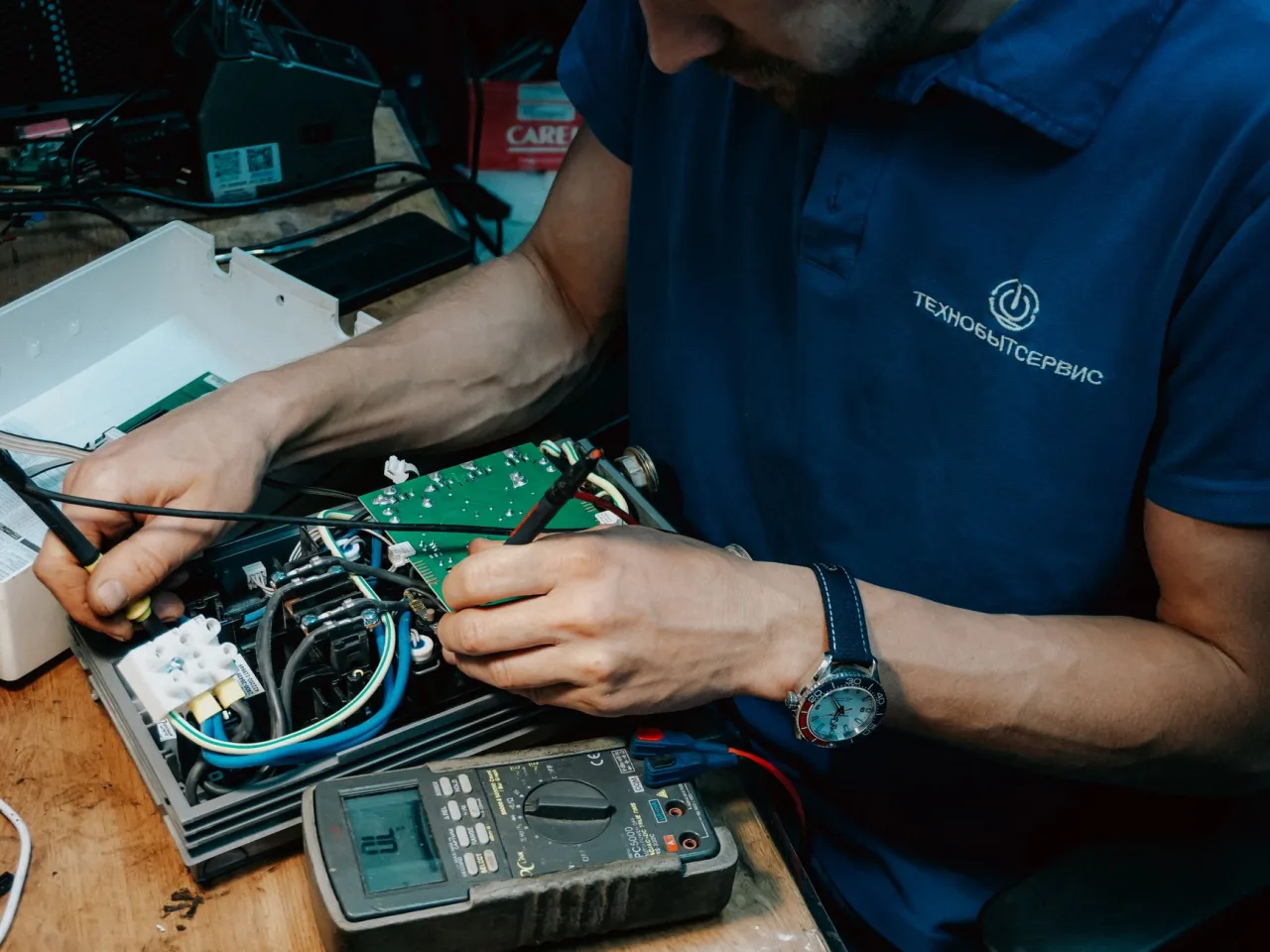
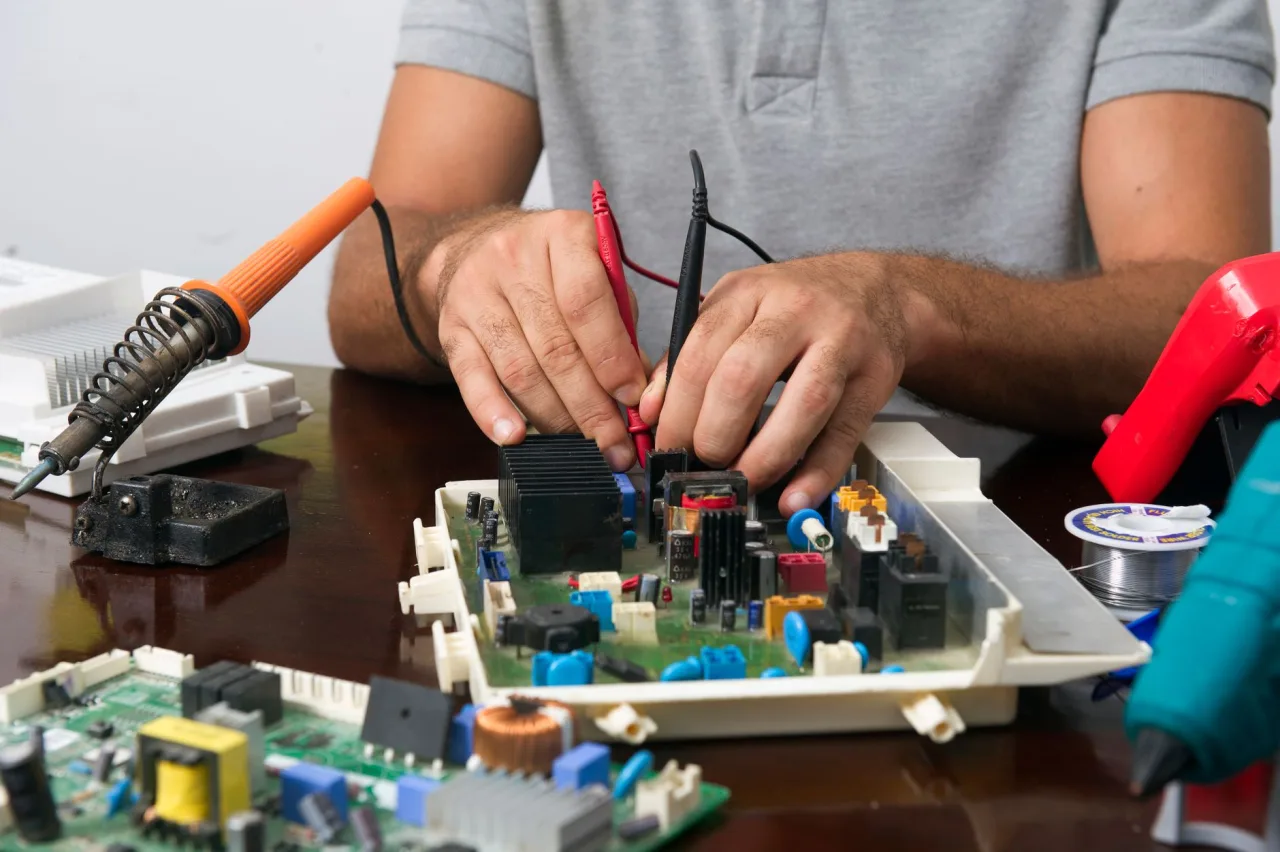
An electrician installs, repairs and maintains the wiring, fittings and protective devices that carry power safely around your home. In the UAE that ranges from swapping a faulty socket in a Dubai Marina apartment to wiring an entire villa in Al Ain, including its air conditioning circuits, water heater, and outdoor lighting.
The local context matters. Electricity in Dubai is supplied and regulated by the Dubai Electricity and Water Authority, a public infrastructure company established in 1992 that supplies power and water across the emirate, as described by Wikipedia's DEWA overview. Because the utility owns the meter and the connection up to your board, any work that touches the permanent supply is expected to follow its rules and be carried out by approved contractors, not casual labour.
Electricians in the UAE usually fall into three groups: contracting companies that hold utility and municipality approvals and handle everything from a fitting to a full fit-out, in-house building maintenance teams that cover common issues for tenants, and individual handymen who legally should stick to minor, non-structural fixes. Knowing which you are dealing with is the first step to a safe job.
Licensed versus unlicensed work, and why it matters here
This is the single most important thing to understand. In the UAE, running a business, including an electrical or maintenance company, requires a trade licence from the relevant economic department, and permanent electrical work is expected to be done by contractors approved by the utility and the municipality. Unlicensed labour is cheaper up front and genuinely risky: no insurance if something goes wrong, no accountability, and potential trouble with your building management or landlord.
Electrical hazards are not theoretical. General wiring safety references, including Wikipedia's article on electrical wiring, note that wiring must meet safety standards for design and installation, that poor installations create shock and fire danger, and that protective devices such as circuit breakers, residual-current devices and proper earthing exist precisely to prevent injury. A qualified electrician sizes cables correctly, protects circuits, and tests earthing; an unqualified one often does not.
Warning: If you rent, most tenancy contracts and building rules require approved contractors for anything beyond trivial fixes. Hiring cheap unlicensed labour can void your security deposit or breach your lease. When in doubt, ask your building management who is approved to work in the tower.
Services electricians commonly handle
Most residential electrical calls in the UAE fall into a predictable set of jobs. Understanding the categories helps you describe the problem clearly and get an accurate quote.
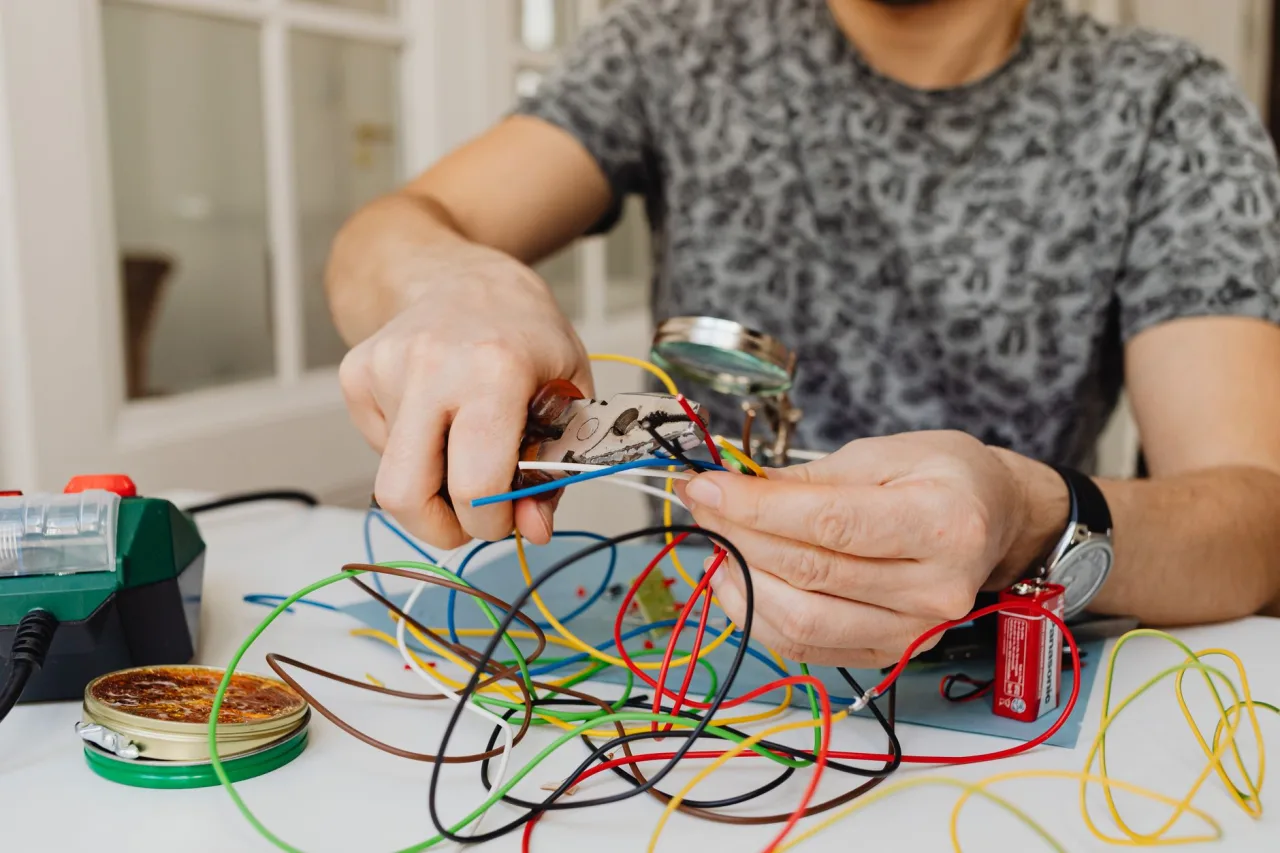
Fittings and fixtures: replacing sockets, switches, dimmers, light fittings, chandeliers and ceiling fans.
Faults and repairs: tracing a tripping breaker, a dead circuit, flickering lights, or a socket that has stopped working.
New circuits and points: adding sockets, a dedicated line for an oven or water heater, or outdoor and garden power.
Distribution board work: upgrading or replacing the consumer unit, adding protection, and labelling circuits.
Rewiring: partial or full replacement of aged or unsafe wiring, common in older villas.
Smart and safety add-ons: smart switches, additional lighting, and residual-current protection for wet areas.
Because bathrooms, kitchens and outdoor areas involve water and heat, they demand extra care in a climate where air conditioning runs hard for months. If your fault sits at the boundary of plumbing and power, such as a water heater or a bathroom fan, our guide to hiring a plumber and electrician explains when you need both trades on site.
What electrical work typically costs in the UAE
Prices vary widely by property size, provider, brand of fittings and location, so use the following only as broad guidance and always get a written quote before work begins. A visit that includes minor labour is very different from a project priced on materials and hours.
Call-out or inspection fee: often around AED 100 to 250, and many companies deduct it from the final bill if you proceed.
Small fittings (socket, switch, light, fan): commonly AED 100 to 350 in labour per point, depending on access and whether you supply the fitting.
Chandelier or feature light install: often AED 150 to 600 or more, driven by height, weight and wiring complexity.
Hourly labour for general work: frequently in the region of AED 80 to 200 per hour per technician.
Distribution board upgrade or partial rewire: a project quote running into the thousands of dirhams, highly dependent on circuit count and property size.
Villas almost always cost more than apartments for the same task because there are more circuits, longer cable runs, outdoor areas and often two floors. Apartment work is frequently constrained by building rules on timing and approved contractors. For a wider view of how home trades are priced locally, see our overview of home maintenance.
Tip: Ask whether the quote is fixed price or time and materials, whether it covers fittings or just labour, and whether there is a warranty on the workmanship. A clear written quote is your best protection against surprise charges.
Dubai, Abu Dhabi and Sharjah: what differs
The trade is broadly similar across the country, but a few practical differences are worth knowing. In Dubai, DEWA is the single utility for power and water, which keeps approvals and connections centralised. Abu Dhabi and the Northern Emirates have their own distribution companies, and Sharjah is served by its own electricity and water authority, so approval processes and the names on paperwork differ by emirate.
Municipal oversight also differs. In Dubai, the municipal body established in 1954 runs an environment, health and safety function among its agencies, as noted in Wikipedia's Dubai Municipality overview, and building rules within each community or tower add another layer. Practically, this means a contractor approved in one tower or emirate is not automatically cleared to work in another, so confirm local approvals before booking.
Timing is a shared reality. During Ramadan, working hours are reduced and many contractors adjust schedules, and summer humidity pushes air conditioning and water heater loads that can expose weak circuits. Booking ahead in peak season is sensible.
How to hire a good electrician
Vetting an electrical provider is mostly about confirming legitimacy and getting the scope in writing. Work through this checklist before you commit.
Confirm the trade licence: ask for the company name exactly as licensed and check it is a registered business, not an individual working off the books.
Check approvals: for board or supply work, confirm the contractor is approved by the utility and cleared by your building or community.
Get a written quote: itemised labour, materials and any call-out fee, with a clear scope.
Ask about insurance and warranty: a legitimate company carries liability cover and stands behind its workmanship.
Read recent reviews: look for comments on punctuality, cleanliness and whether the final bill matched the quote.
When you only need a small, non-structural fix such as hanging a light or a fan, a general handyman may be enough and cheaper. Our handyman guide explains where that line sits, and if you want the hiring specifics for your area, read our companion piece on finding an electrician near you.
Safety and when to call an emergency electrician
Some situations should not wait for a scheduled visit. Treat the following as reasons to isolate the affected circuit at the board and call a professional quickly: a burning smell or scorch marks around a socket, repeated tripping that will not reset, warm or discoloured switches, exposed conductors, or any shock felt from an appliance or tap. In a country where air conditioning and water heaters run constantly, overloaded and aged circuits are a real cause of faults.
Do not attempt board-level work, rewiring or anything involving the incoming supply yourself. Beyond the danger, unauthorised work can breach your tenancy and utility rules. If you are unsure whether an issue is electrical or appliance related, an AC fault in particular can masquerade as an electrical one, so our guide to an AC technician can help you route the call correctly.
Frequently asked questions
Do I need an approved contractor for small electrical jobs in the UAE?
For trivial, non-structural tasks such as replacing a light fitting or a ceiling fan, a licensed general handyman is usually fine. For anything touching the distribution board, permanent wiring or the incoming supply, you should use a contractor approved by the utility and cleared by your building. This protects your safety, your insurance and your tenancy.
How much does an electrician cost in the UAE?
As a broad guide, expect a call-out or inspection fee of roughly AED 100 to 250, small fittings around AED 100 to 350 in labour per point, and hourly rates often in the region of AED 80 to 200 per technician. Larger work such as board upgrades or rewiring runs into the thousands. Prices vary by property size, provider and location, so always get a written quote first.
Is electrical work more expensive in a villa than an apartment?
Usually yes. Villas have more circuits, longer cable runs, outdoor areas and often multiple floors, so the same task takes longer and needs more material. Apartment work is often cheaper for a single fitting but can be constrained by building rules on timing and approved contractors.
What should a good electrician quote include?
A clear quote states whether it is fixed price or time and materials, itemises labour and materials, notes any call-out fee, and confirms whether fittings are supplied by you or the company. It should also mention any warranty on the workmanship. If a provider will not put the scope in writing, treat that as a warning sign.
What counts as an electrical emergency?
A burning smell or scorch marks, repeated tripping that will not reset, warm or discoloured switches, exposed conductors, or a shock from an appliance or tap are all reasons to isolate the circuit and call a professional quickly. Do not attempt board-level or supply work yourself.