Marble is everywhere in UAE homes and towers: hallway floors, staircases, bathroom vanities,
kitchen counters and lobby feature walls. It looks timeless, but it is also soft, porous and
acid-sensitive, so the wrong cleaning routine can dull or etch it permanently. This complete guide
explains how to clean marble safely, when cleaning is not enough and polishing is needed, what the
work costs in 2026, and how to hire a provider who will protect your stone rather than damage it.
The short version
Use pH-neutral cleaners only. Acids like vinegar, lemon or strong bathroom descalers etch marble and leave dull marks.
Cleaning removes dirt. Polishing, honing and crystallisation restore shine and remove etching, and are separate specialist jobs.
UAE dust acts like sandpaper and hard water leaves a cloudy film, so grit control and drying matter more here than in most climates.
Marble work is quoted per square metre and by condition, so get a written quote after the provider knows your stone and area.
Why marble needs its own care routine
Most people treat marble like any other hard floor or counter, and that is exactly how it gets
ruined. As the reference overview of
marble
explains, it is a metamorphic rock made mostly of calcium carbonate, which reacts chemically with
acids. That single fact drives every rule of marble care: an acidic cleaner does not just fail to
clean, it corrodes the surface and leaves a dull, rough patch called etching. Marble is also soft
and porous, so it scratches easily and absorbs coloured liquids like coffee, tea, turmeric and red
wine if they are left to sit.
In the UAE two extra factors make things harder. Fine desert sand is tracked in constantly and
grinds into the surface underfoot, and the tap water is very
hard,
leaving a mineral film that makes polished marble look permanently cloudy. Good marble care in this
climate is as much about controlling grit and water as it is about the cleaning product itself.
The difference between cleaning, polishing and sealing
These three words get used interchangeably by providers, but they are completely different jobs at
very different prices. Knowing which one you actually need is the key to not overpaying or
underspecifying.
Cleaning removes surface dirt, dust and grime using a pH-neutral stone cleaner. It keeps marble hygienic and presentable but does not fix dullness or scratches.
Honing uses abrasives to grind away light etching and scratches and produces a smooth matte or satin finish.
Polishing takes the stone up through finer abrasives to restore a reflective shine.
Crystallisation is a chemical and mechanical process that creates a hard, glossy top layer, popular in UAE lobbies for a mirror finish.
Sealing applies an impregnating sealer that slows liquid absorption, reducing staining. It does not make marble waterproof or acid-proof, and it wears off, so it needs redoing periodically.
A routine marble clean often rides along with a general
home cleaning
visit, while restoration like honing, polishing or crystallisation is a specialist booking that
overlaps with
floor polishing.
If your marble is one of several floor types in the home, our broader
floor cleaning guide
covers how to treat each material without cross-contaminating methods.
Warning: Never use vinegar, lemon, bleach, or generic bathroom and kitchen
descalers on marble, including marble bathroom vanities and kitchen counters. They contain acids
that etch the stone in seconds. If a product does not clearly say it is safe for natural stone or
pH-neutral, keep it away from marble.
Marble around the home: floors, counters, bathrooms and stairs
Each marble surface in a UAE home faces a different threat, and the care shifts accordingly.
Floors collect sand and foot traffic, so grit control and periodic polishing matter most. Dust-mop before any wet cleaning so you are not grinding sand into the finish.
Kitchen counters face acidic food spills, oil and heat. Wipe spills immediately and keep marble care aligned with your wider kitchen cleaning routine, using stone-safe products only.
Bathroom vanities and shower walls battle hard-water scale and soap film. Squeegee and dry after use, and avoid the acidic limescale removers most people reach for.
Staircases and thresholds wear at the edges and nosing first, so these high-traffic strips usually need attention before the rest of the floor.
Safe DIY maintenance between professional visits
You can keep marble looking good day to day with a short, disciplined routine. The goal is to
remove grit and moisture, not to scrub aggressively.
Dust-mop or vacuum floors regularly to remove abrasive sand before it scratches the surface.
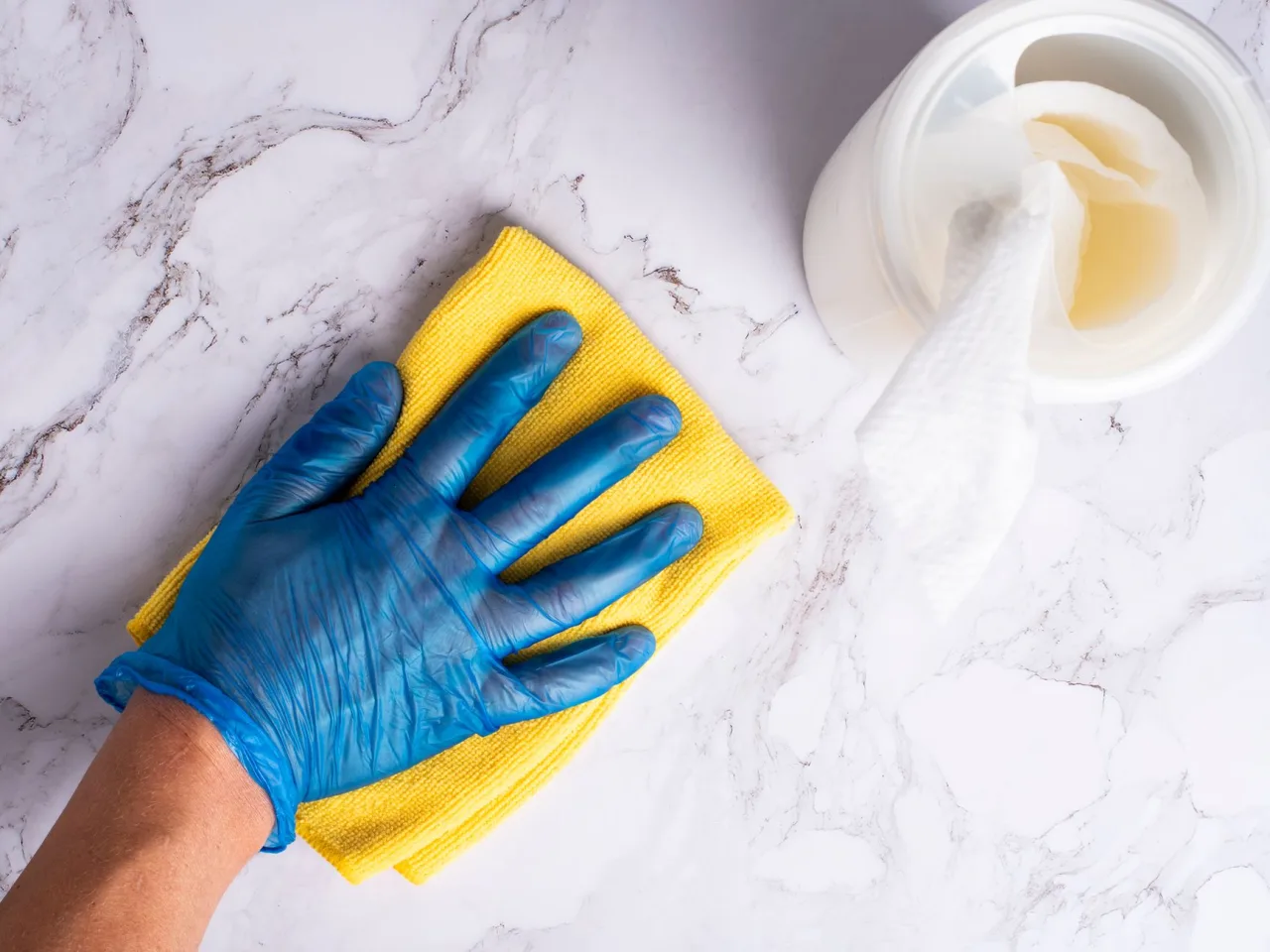
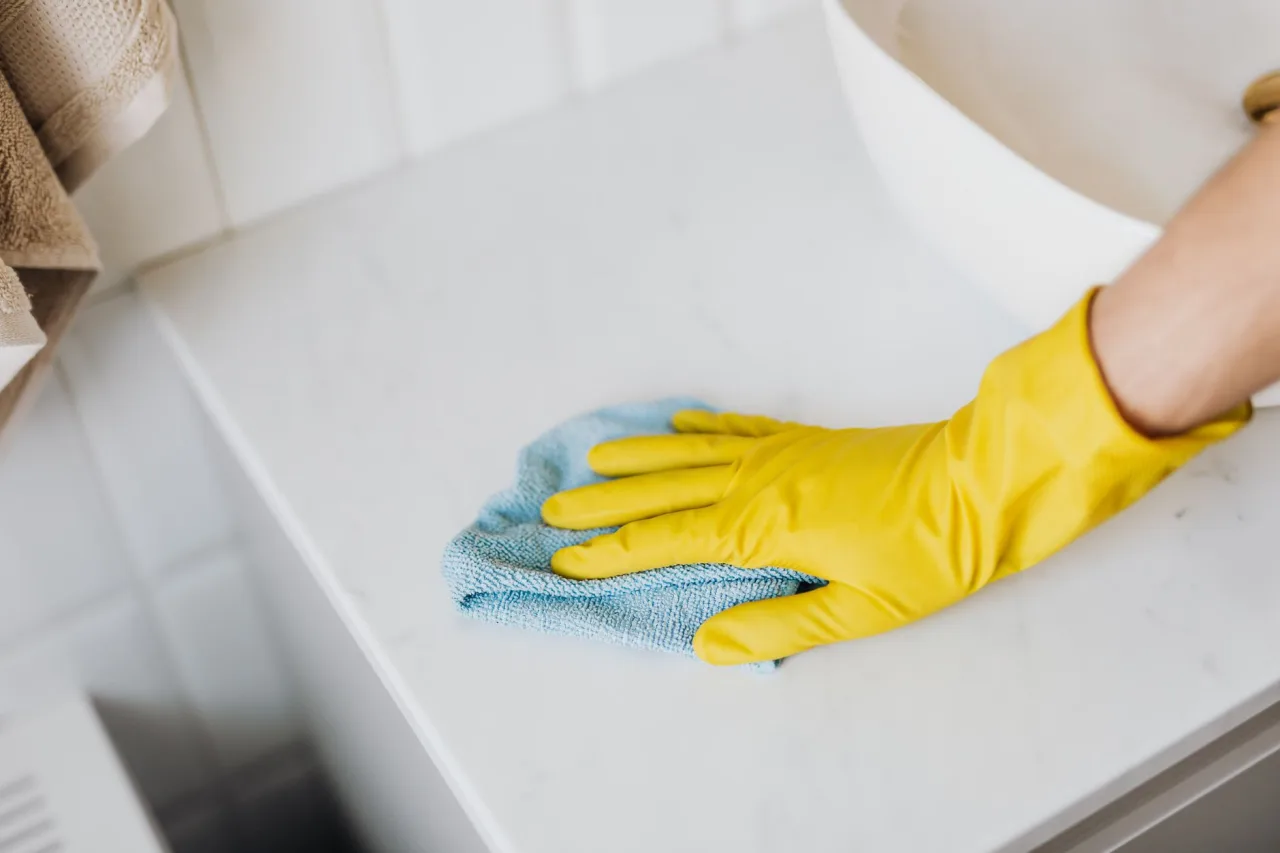
Damp-mop with a well-wrung microfiber mop and a pH-neutral stone cleaner diluted per the label.
Dry the surface, especially in hard-water zones, so mineral film does not build up and cloud the shine.
Blot spills immediately rather than wiping them across the stone, and never leave acidic drinks or foods sitting.
Use coasters, trivets and mats at entrances and in front of sinks to cut incoming grit and spills.
That is genuinely all safe home care should involve. Anything that promises to remove etching or
restore shine at home usually means abrasives or acids that make the problem worse.
What marble cleaning and restoration cost in the UAE
The figures below are typical 2026 ranges, not fixed prices, because marble work is quoted by area
and by condition. A lightly soiled apartment floor and a scratched, etched villa staircase are
completely different jobs even at the same square metre count.
Routine marble cleaning: usually folded into a general or deep clean rather than priced on its own.
Polishing and crystallisation: priced per square metre, with the rate rising as the level of restoration increases from a light buff to full grinding.
Honing out etching and scratches: more involved than polishing alone and priced accordingly, since it removes a thin layer of stone.
Sealing: often quoted per square metre or as an add-on after polishing.
Apartment versus villa: a villa with marble across several rooms and a staircase is a much larger total than a single apartment, purely on area.
Minimum charge: specialist stone work usually carries a call-out minimum, so small jobs cost more per square metre.
Prices vary by property size, stone type, condition, provider and location, and Dubai, Abu Dhabi and
Sharjah can differ. Get a written quote after the provider has seen the marble or been told the type
and area, and be cautious of any polishing price quoted before anyone knows the condition of the
stone. There is no single honest fixed rate for marble restoration.
Tip: Before booking full-floor polishing, ask the provider to test a small,
low-visibility area first. A sample patch shows you the realistic result on your specific stone and
protects you from paying for a whole floor that does not come up the way the brochure promised.
How to hire a marble cleaning and polishing provider
Marble restoration uses heavy machines and abrasives, so a poor operator can do damage that is
expensive to reverse. Vet carefully:
Confirm they identify your surface correctly as marble and can explain the safe method for it.
Ask specifically whether the job is cleaning, honing, polishing, crystallisation or sealing, so you are comparing like for like across quotes.
Check that they are licensed and insured, which matters most for machine work that could damage stone if done wrong.
Ask to see examples of similar marble they have restored, ideally in the UAE.
Get the full scope, finish and price in writing, and request a test patch before committing to a large area.
If marble is part of a bigger reset, for example after a renovation or before moving in, it is often
bundled into a
deep clean,
where the floors, grout and stone are all restored together in one visit.
Marble care across a UAE year
The environment shifts with the seasons here, and marble care can follow it. Through the long, hot
summer the air conditioning runs constantly and windows stay shut, so less outdoor dust arrives but
hard-water film from cleaning is the main enemy, which means drying surfaces matters most. In the
cooler months when doors and windows open, more sand blows in, so grit control and dust-mopping take
priority. Many households schedule a professional polish once or twice a year and keep to the simple
pH-neutral routine in between. That rhythm keeps high-traffic marble looking new without paying for
restoration more often than the stone actually needs it.
Frequently asked questions
How much does marble cleaning cost in the UAE?
Routine marble cleaning is usually part of a general or deep clean, while polishing, honing,
crystallisation and sealing are specialist per-square-metre jobs priced by the level of restoration.
Prices vary by property size, stone type, condition, provider and location, so get a written quote
after the provider knows your marble and area.
Can I use vinegar or a limescale remover on marble?
No. Vinegar, lemon and most limescale and bathroom descalers are acidic, and acids react with the
calcium carbonate in marble, leaving dull etched marks that only professional honing or polishing can
remove. Use a pH-neutral cleaner made for natural stone.
What is the difference between marble cleaning and polishing?
Cleaning removes surface dirt using a stone-safe cleaner and keeps marble hygienic, but it cannot fix
dullness, scratches or etching. Polishing, honing and crystallisation use abrasives or chemicals to
restore shine and remove damage, and they are separate, more expensive specialist jobs.
Why does my marble look cloudy or dull even after cleaning?
Usually because of hard-water mineral film, fine sand scratching, or acid etching from the wrong
product. UAE tap water leaves deposits as it dries, so use less water, a microfiber mop and dry the
surface. If dullness remains, the stone likely needs professional polishing rather than more cleaning.
How often should marble be professionally polished?
It depends on traffic and wear, but high-traffic UAE marble often benefits from professional
polishing once or twice a year, with pH-neutral care in between. A specialist can recommend a
schedule after seeing how your specific stone is wearing.
Does sealing make marble stain-proof?
No. A sealer slows how fast liquids soak in, giving you more time to wipe spills, but it does not make
marble waterproof or acid-proof and it wears off over time. You still need to blot spills quickly and
avoid acidic products, and reseal periodically.