Choosing a facilities management company is one of the bigger decisions a UAE building owner, developer, or owners association makes, because the contract touches every occupant every day and usually runs for a year or more. This guide explains what facilities management companies actually do, how they price the work, the KPIs that separate a strong provider from a weak one, and the questions to ask before you sign. Any figures below are general ranges, not quotes.
The short version
Facilities management companies coordinate hard services (physical systems like HVAC and lifts) and soft services (people services like cleaning and security) under one accountable contract.
They are priced by model, commonly a fixed annual contract, a per square foot rate, or a per unit per month charge. Costs vary widely by building size, scope, and service level, so get a written quote.
Judge companies on measurable KPIs: response and resolution times, planned maintenance completion, first-time fix rate, and compliance, not just the headline fee.
Confirm the trade licence, ask what is excluded, and look for recognised standards like ISO 41001 before you commit.
What facilities management companies actually do
A facilities management company takes responsibility for keeping a building functional, safe, and efficient, so that owners and occupants do not have to manage a dozen separate suppliers themselves. According to the industry overview, facility management integrates people, place, and process within the built environment, which in plain terms means one organisation coordinates maintenance, cleaning, security, and safety systems as a single programme rather than a pile of disconnected jobs.
The value is accountability. When a lift fails, a chiller trips, or a common area is left dirty, there is one contract and one point of contact answerable for it. That is the difference between an FM company and hiring trades piecemeal, and it is why towers, malls, and managed communities across the UAE use them. For the underlying discipline and how it differs from simple repairs, our facilities management guide goes deeper.
Hard services and soft services
Every FM proposal you read will split the work into two families, and knowing the difference helps you compare offers fairly.
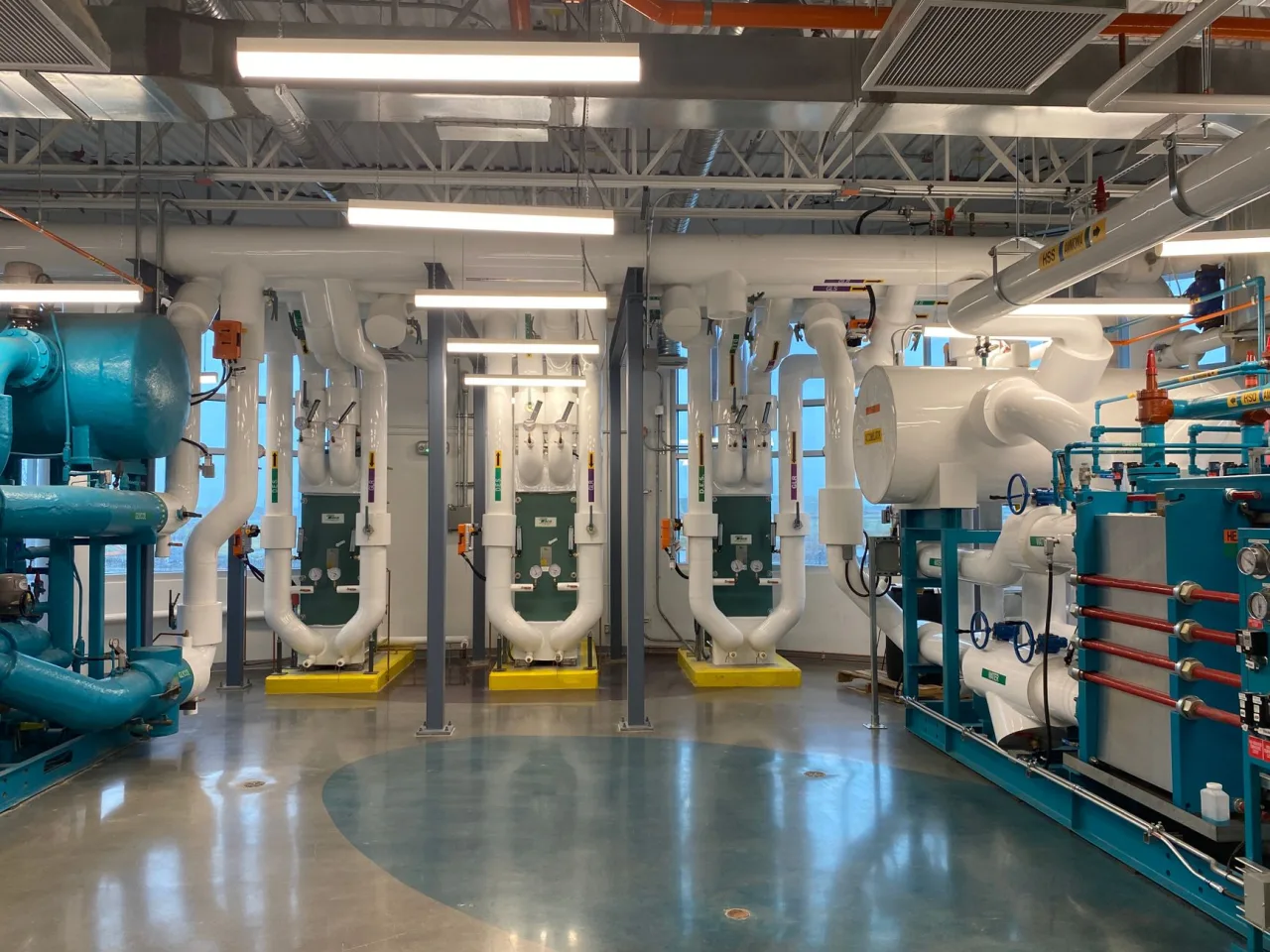
Hard services: the physical fabric and engineering of the building, including HVAC and district cooling, electrical distribution, plumbing and drainage, lifts and escalators, and fire and life-safety systems.
Soft services: the people-facing work that keeps a building pleasant and safe, including cleaning, security, landscaping, pest control, and waste management.
In the UAE, hard services carry extra weight because of the climate. Air-conditioning runs hard for much of the year, and the summer load on chillers and HVAC is intense, so a company's engineering capability, including a competent AC technician resource, matters more here than in milder markets. A weak cooling response is felt by every resident within hours.
Types of facilities management companies
Not every provider does everything, and the label "FM company" covers several models. Matching the type to your building saves money and disappointment.
Single-service specialists: firms focused on one area such as cleaning, security, or MEP maintenance. Good when you only need that scope.
Integrated FM (IFM) providers: companies that deliver hard and soft services together under one contract, either with in-house teams or managed subcontractors.
Managing agents: firms that manage a building and its service charge on behalf of an owners association, often procuring FM services on the community's behalf.
A single villa or small building often needs only a building maintenance company, while a high-rise or mixed-use community benefits from an integrated provider. For task-based commercial services rather than a full building contract, our facility management services guide explains what individual services look like and cost.
How facilities management companies price the work
FM contracts are commercial agreements, so pricing follows the scope and service level rather than a fixed rate card. Providers typically use one of a few models, and combining them is common. Treat the models below as a framework and always obtain a written quote scoped to your building, because size, condition, and service level move the number enormously.
Fixed annual contract: a set fee for an agreed scope over a year, giving budget certainty. Common for residential and commercial buildings.
Per square foot: a rate applied to the built-up or managed area, which scales naturally with building size.
Per unit per month: a charge per apartment or unit, often used within owners-association service charges.
Comprehensive versus non-comprehensive: comprehensive contracts fold spare parts and consumables into the fee, while non-comprehensive contracts bill materials on top of labour.
Because scope drives cost, two quotes are only comparable when the scope matches. A cheaper contract that excludes spare parts, thins out staffing, or specifies slower response times is not truly cheaper, it has just moved the cost somewhere you will meet it later. Line up inclusions, exclusions, and KPIs side by side before you compare the bottom-line figures.
Tip: Ask every company what the contract excludes, not just what it includes. Response-time bands, spare-parts treatment, out-of-hours cover, and specialist works like lift and fire-system servicing are the clauses that separate a genuine bargain from a false economy.
The KPIs that reveal a good FM company
Serious facilities management is measurable, and a capable company reports against defined KPIs rather than offering vague reassurance. When you tender or review a contract, insist on these.
Response time: how quickly the team acknowledges and attends a logged request, usually banded by priority.
Resolution time: how long it takes to actually fix an issue, not merely respond to it.
Planned maintenance completion: the percentage of scheduled preventive tasks finished on time.
First-time fix rate: how often a fault is cleared on the first visit.
Compliance: adherence to fire, safety, and statutory inspection requirements.
Occupant satisfaction: feedback from residents or tenants, often gathered through the helpdesk.
A structured schedule of planned preventative maintenance underpins most of these numbers, because servicing assets before they fail is what keeps breakdowns and emergency call-outs low. On standards, the recognised management system standard for the field is ISO 41001, which sets requirements for a facilities management system. A company certified or working to it is signalling a structured, auditable approach rather than ad hoc service.
Licensing and the UAE context
Any company delivering FM services in the UAE must hold the appropriate trade licence for the activities in scope, and larger contracts often touch regulated works such as fire systems and lifts. Government guidance on doing business in the UAE sets out the licensing framework that legitimate companies operate within, and confirming a provider's licence is a basic first check before you go further.
Local realities shape the market too. High-rise living is widespread, so lifts, fire safety, and facade access are core concerns. Many communities are governed by owners associations, and FM costs flow through service charges paid by unit owners, which makes transparent pricing and reporting especially important. During Ramadan, working hours shift and some noisy works are rescheduled, and a good company plans around that rather than treating it as a surprise. For whole-property scope beyond a single service, our building and facilities guide covers managing the property as a whole.
Watch out for: a quote that looks unusually low. In a labour-intensive service, a rock-bottom price usually means fewer staff hours, unlicensed labour, or materials billed separately later. Cheap FM that misses statutory inspections is a safety and compliance risk, not a saving.
How to choose the right FM company
Selecting an FM partner is a bigger decision than booking a one-off job, because the relationship runs long and reaches every occupant. Weigh capability and accountability above the headline price.
Relevant licence and track record: confirm the company is licensed for the services in scope and has managed buildings comparable to yours.
Clear KPIs and reporting: insist on defined performance metrics and regular reports you can actually review.
In-house versus subcontracted: understand which services are delivered directly and which are subcontracted, and how the company manages that chain.
Compliance and safety record: ask how they handle statutory inspections and life-safety systems.
Transparent commercial terms: get the pricing model, inclusions, exclusions, and escalation clauses in writing before you sign.
Shortlist on capability, then compare like-for-like quotes. The best company is rarely the cheapest and rarely the most expensive, it is the one whose scope, KPIs, and licence match your building and whose reporting you trust.
Frequently asked questions
What does a facilities management company do?
A facilities management company coordinates the services that keep a building functional, safe, and efficient, covering hard services like HVAC, electrical, plumbing, lifts, and fire safety, and soft services like cleaning, security, landscaping, and waste management. It provides a single accountable contract and point of contact instead of many separate suppliers.
How much do facilities management companies charge in the UAE?
Common pricing models include a fixed annual contract, a per square foot rate, or a per unit per month charge often used within owners-association service charges. Contracts may be comprehensive, including spare parts, or non-comprehensive, billing materials separately. Costs vary widely by building size, scope, and service level, so always get a written quote scoped to your building.
What is the difference between hard and soft FM services?
Hard services cover the physical systems of a building, including HVAC, electrical, plumbing, lifts, and fire-safety systems. Soft services cover people-facing work such as cleaning, security, landscaping, pest control, and waste management. Integrated providers deliver both under one contract, and in the UAE hard services carry extra weight because of the heavy year-round air-conditioning load.
How do I compare facilities management companies fairly?
Compare them on matched scope, not just the headline fee. Line up inclusions, exclusions, response and resolution times, planned maintenance completion, and compliance side by side. A cheaper contract that excludes spare parts or specifies slower response is not truly cheaper. Confirm each company's trade licence and ask for sample KPI reports.
Do facilities management companies need a licence in the UAE?
Yes. Any company delivering FM services must hold the appropriate trade licence for the activities in scope, and larger contracts often involve regulated works like fire systems and lifts. Confirming the licence is a basic first check, and legitimate companies operate within the UAE business licensing framework.
Note: This article is general guidance. Pricing models are described in general terms, not as quotes, and actual costs vary widely by building size, scope, service level, and location. Confirm any company's licence, KPIs, and written scope before contracting.