If you have searched for "idama facility management," you are almost certainly comparing companies
that look after a residential community, tower or mixed-use building in the UAE. This is an
independent guide, not affiliated with any single provider. It explains what integrated facility
management means for a community, how service charges and owners associations fit in, and how to
judge whether a building is being run well.
The short version
Facility management for a community covers hard services (MEP, lifts, chillers) and soft services (cleaning, security, landscaping) under one plan.
In Dubai, common-area upkeep is funded by service charges set through the owners association framework and overseen by the Dubai Land Department.
Community service charges commonly fall in a wide band, often around AED 3 to AED 30+ per square foot per year, depending on the building and its shared amenities.
Prices vary by property size, provider and location. Always get a written scope and quote before signing.
What "idama facility management" really means
Idama is Arabic for sustainability or keeping something going, and it is a term people associate with
keeping a building healthy over its whole life. When residents or owners type the phrase into a search
engine, they are usually looking for a company that manages the shared parts of a development: the
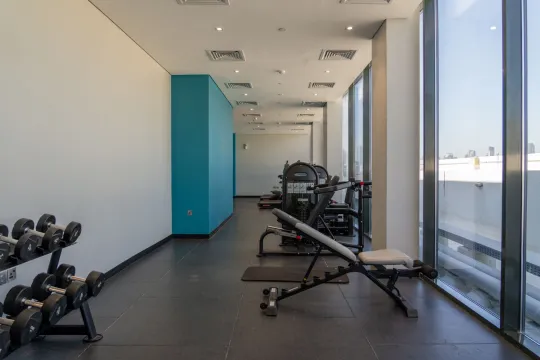
lobbies, corridors, lifts, car parks, pools, gyms, chiller plants and landscaped areas that no single
apartment owner is responsible for alone.
The industry term for this is facility management, or FM. As the
overview of facility management
explains, the discipline coordinates a building's physical systems and the support services that keep
it functional, safe and comfortable for the people who use it. For a residential community, doing that
well is the difference between a tower that holds its value and one that slowly runs down.
Hard services and soft services
Community FM splits into two broad buckets. Understanding the split helps you read a quote and spot
gaps.
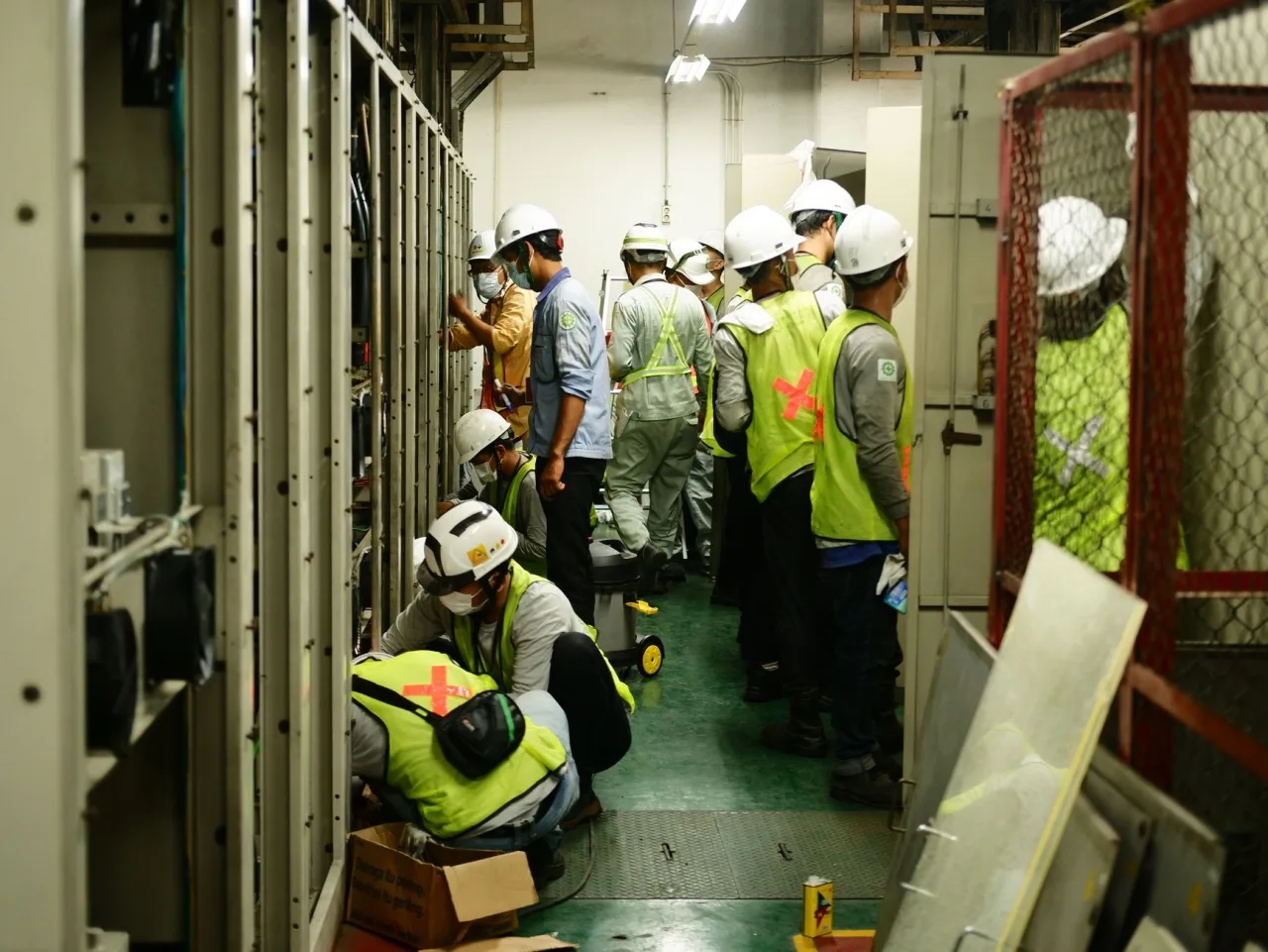
Hard services are the engineering and fabric of the building: mechanical, electrical and plumbing (MEP) systems, air conditioning and chiller plant, lifts and escalators, fire and life-safety systems, water tanks, generators and structural upkeep.
Soft services are the people-facing, recurring tasks: common-area cleaning, security and concierge, waste management, landscaping and irrigation, pest control and pool maintenance.
A good provider treats both as one coordinated plan rather than a pile of disconnected contracts. That
is the idea behind the integrated model, which we cover in depth in our guide to
integrated facilities management.
If you only need help with the engineering side, a
building maintenance company
may be a better fit than a full FM contract.
Owners associations and service charges
In Dubai, the cost of running a community's common areas is funded by service charges paid by owners.
These charges are set within the owners association framework and are overseen by the Dubai Land
Department, which publishes a
Service Charge Index
so buyers and residents can benchmark what a building charges. Service charges are usually quoted per
square foot per year and are split across cost lines such as general fund, reserve fund, master
community charge and utilities for common areas.
A well-run community publishes a clear annual budget, holds the reserve fund for big future works such
as chiller or lift replacement, and reports actual spend against budget. If a building cannot tell you
where the service charge goes, that is a warning sign regardless of which FM brand is on the invoice.
Tip: Before buying an apartment, ask for the current service charge per square foot
and the last two years of the community budget. A tower with a rich set of amenities (multiple pools,
large gym, extensive landscaping) will sit at the higher end of the range, and that recurring cost is
yours for as long as you own.
What community FM should cost
There is no single price, because a low-rise building with a small lobby and one lift is a completely
different job from a high-rise with chiller plant, several pools and hundreds of units. As a rough
guide only, community service charges in Dubai often fall somewhere between AED 3 and AED 30 or more
per square foot per year, with luxury and amenity-heavy towers reaching the upper end.
Apartments in mid-market towers usually sit in the lower to middle part of that band.
Villas and townhouses in managed communities often pay a master community charge for shared roads, parks and security rather than a per-building charge.
Amenity-rich or waterfront towers carry higher charges because pools, marinas and district cooling cost more to run.
Treat any figure here as a starting point, not a promise. Prices vary by property size, provider and
location, and the only reliable number is a written quote or a published, audited community budget.
Never accept a specific company's rate quoted second-hand as gospel.
How to judge whether your building is well run
You do not need to be an engineer to tell a healthy building from a neglected one. Walk it and look
for the signs that planned maintenance is actually happening.
Lifts are serviced on schedule and rarely out of order for long.
Common-area air conditioning is cold and even, and chiller or plant rooms are tidy and labelled.
Fire doors, extinguishers and alarm panels show current inspection tags.
Corridors, car parks and pool areas are clean daily, not just before an inspection.
There is a clear way to log a fault and a track record of it being fixed.
Behind those visible signs sits a maintenance schedule. The best communities run
planned preventative maintenance,
servicing equipment before it fails rather than waiting for a breakdown in the middle of a UAE summer
when AC load is at its peak.
Choosing or changing an FM provider
Owners associations and building owners do periodically re-tender FM. If you sit on a committee or are
a large owner, these questions separate a serious provider from a cheap one:
What is the exact scope, and what is explicitly excluded (for example, is chiller plant a separate specialist contract)?
What are the response times for emergencies such as a stuck lift, water leak or total AC failure, and are they written into a service level agreement?
Is there a 24/7 helpdesk, and how are jobs logged and tracked?
What certifications and insurance does the company hold, and are its technicians directly employed and trained?
Watch out: The cheapest FM tender almost never stays the cheapest. Corners get cut
on preventative maintenance, small faults become large capital repairs, and the reserve fund ends up
covering emergencies that planning should have avoided. Judge value over a full year, not on the
headline monthly figure.
Frequently asked questions
Is Idama a specific company or a general term?
People use the phrase as a branded search when hunting for a facilities management provider in the
UAE, but the underlying service is the same across the market: managing a building's shared systems
and services. This guide is independent and explains the service generically so you can compare any
provider on scope, response times and price.
What is the difference between facility management and simple maintenance?
Maintenance is one task, fixing or servicing equipment. Facility management is the whole coordinated
programme: planning, budgeting, hard and soft services, compliance and reporting across the entire
building over its life. Maintenance is a part of FM, not a replacement for it.
How much are service charges in a Dubai community?
They vary widely, often somewhere between AED 3 and AED 30 or more per square foot per year depending
on the building and its amenities. The Dubai Land Department publishes a Service Charge Index you can
use to benchmark a specific tower. Always confirm the current figure in writing before you buy.
Who sets and controls the service charge?
In Dubai, service charges are set within the owners association framework and overseen by the Dubai
Land Department. A well-run community publishes an annual budget, holds a reserve fund for major future
works, and reports actual spending against that budget to owners.
How do I know if my building is being managed well?
Look for lifts and AC that work reliably, current fire-safety inspection tags, clean common areas,
tidy plant rooms and a fault-logging system with a track record of repairs. Regular planned
preventative maintenance is the clearest sign of a well-run building.