Facility management is the invisible work that keeps a building running: the AC that never fails, the lifts that always work, the lobby that is always clean. In the UAE, where towers and communities are dense and standards are high, good facility management is the difference between a well-run property and a stream of complaints. This guide explains what facility management services cover, what they cost in 2026, and how to choose a provider.
The short version
Facility management splits into hard services (AC, electrical, plumbing, lifts, fire systems) and soft services (cleaning, security, landscaping, waste, pest control).
Contracts are usually priced per square foot per year or as a fixed annual fee, and structures vary widely, so a written quote is essential. Prices vary by property size, provider and location.
The international benchmark is the ISO 41001 facility management standard, and mature UAE providers often align to it.
For a single home, you rarely need full FM. It becomes worthwhile for villas with many systems, buildings, and commercial or community property.
What facility management actually covers
Facility management, often shortened to FM, is the coordinated management of a building and the support services that keep it functional, safe and comfortable. The international overview of facility management defines it as an organisational function that integrates people, place and process within the built environment, and it is formalised in the ISO 41001 management standard that mature providers aim to follow.
In practice, UAE facility management services divide into two families:
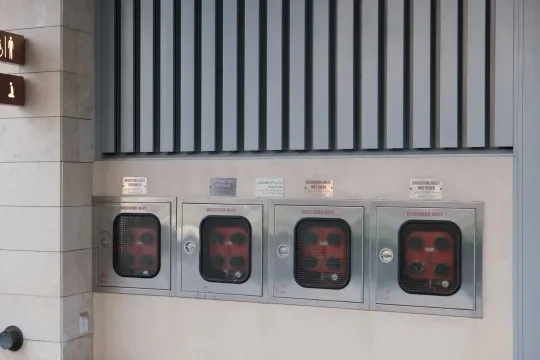
Hard services: the physical systems of the building. Air conditioning and HVAC, electrical, plumbing and drainage, lifts and escalators, fire safety and building management systems.
Soft services: the human-facing upkeep. Cleaning and housekeeping, security, landscaping, waste management, pest control and concierge.
A full-service FM provider delivers both under one contract, giving a building owner a single point of accountability rather than a dozen separate suppliers. If you only need one trade fixed, an HVAC technician or a specific contractor is more appropriate than a whole FM contract.
Hard versus soft services, and why the split matters
The hard and soft distinction is not just jargon, it changes how work is priced and staffed. Hard services are technical, safety-critical and regulated: a fire pump or a lift must be maintained to code, and failures carry legal and safety consequences. Soft services are labour-driven and judged on visible quality: a clean lobby, healthy landscaping, a polite security desk.
Many UAE buildings buy the two separately. It is common to keep hard services with a specialist engineering firm while contracting office and common-area cleaning to a dedicated cleaning company. Bundling everything with one FM provider trades a little flexibility for simpler accountability. Neither approach is wrong: it depends on the property and how hands-on the owner wants to be.
What facility management costs in the UAE (2026)
FM pricing is less standardised than a one-off repair, because contracts are shaped around the specific building. The figures below are indicative 2026 ranges only, not fixed rates from any company, and they move heavily with property type, system complexity, service scope, emirate and contract length. A written, itemised quote is essential.
Comprehensive villa FM contract: commonly a few thousand dirhams per year for a package covering scheduled AC, plumbing, electrical and general handyman visits, rising with villa size and system count.
Building or commercial FM: typically priced per square foot per year, or as a negotiated annual fee, and scoped to the systems on site.
Ad hoc and reactive call-outs: billed on top of, or instead of, a contract, at trade call-out rates.
Two structures dominate. A fixed-price comprehensive contract bundles scheduled maintenance and a set number of reactive visits into one annual fee, which makes budgeting predictable. A pay-as-you-go arrangement covers only scheduled inspections, with repairs billed separately. Predictable budgets favour the first, tight cost control favours the second.
The value of preventative maintenance
The strongest reason to use FM in the UAE climate is prevention. Continuous AC load, humidity and dust wear systems fast, and a reactive-only approach means you pay for emergencies at emergency prices. A structured planned preventative maintenance programme catches a failing part before it fails, which is almost always cheaper than the breakdown, the collateral damage and the tenant complaints that follow.
Tip: When comparing FM quotes, look past the headline annual price to the scheduled visit frequency and what counts as included versus extra. A cheaper contract with fewer preventative visits often costs more once reactive repairs are added over the year.
How to choose a facility management provider
FM is a long-term relationship, so vet the provider more carefully than a one-off contractor. Work through this checklist:
Licensing and scope. Confirm the provider holds the relevant trade licences for the services it delivers. You can review the UAE licensing framework on the official government business portal. Some technical work also requires approvals from the local authority or utility.
Standards alignment. Ask whether their processes align to a recognised standard such as ISO 41001. It signals mature, documented systems rather than ad hoc fixes.
In-house versus subcontracted. Find out which trades are delivered by their own staff and which are subcontracted, since that affects response times and quality control.
Response commitments. A serious FM contract states target response times for emergencies, urgent and routine jobs in writing.
Reporting. Good providers give you visibility: job logs, asset registers and maintenance schedules, not just an invoice.
Onboarding: what a good handover looks like
The first few weeks of an FM contract set the tone for the whole relationship, and a rushed handover is a common source of later disputes. A competent provider begins by surveying the property and building an asset register: a documented list of every major system, its make, age and condition. That register is what makes planned maintenance possible, because you cannot schedule servicing for equipment nobody has catalogued.
Expect the provider to agree a maintenance calendar, confirm access arrangements and emergency contacts, and set out how you will log and track jobs. If a previous contractor is being replaced, insist on a clean handover of records rather than starting blind. Buildings that skip this step often pay for it later, when an uncatalogued pump or fire panel fails and nobody has its service history. A well-run onboarding also flags quick wins, the neglected items that were quietly heading toward failure, so they can be fixed before they become emergencies. It is also worth asking a prospective provider to walk you through how they build and maintain an asset register, because the quality of that answer reveals more about how they work than any headline price.
KPIs: how good FM is measured
Because FM is ongoing, quality is tracked through key performance indicators rather than a single before-and-after. Reasonable KPIs in a UAE contract include response and resolution times against agreed targets, planned maintenance completed on schedule, equipment uptime for critical systems such as lifts and AC, and resolution of resident or tenant complaints. For a deeper look at how buildings are run to standard, see our practical guide to facilities management and the companion overview of building and facilities.
Warning: Avoid contracts with no defined KPIs or response times. Without measurable targets you have no fair basis to hold a provider to account, and reactive-only arrangements tend to quietly become expensive as small issues grow into big ones.
Do you actually need facility management?
For a single apartment, you do not: a maintenance call-out or a light home maintenance routine is enough. FM starts to make sense when the property gets complex or when someone other than you must be kept happy: a large villa with many systems, a building with shared services, a commercial unit, or an owners association managing common areas. The more systems and stakeholders involved, the more a coordinated FM contract earns its fee.
Frequently asked questions
What is the difference between facility management and maintenance?
Maintenance is fixing or servicing a specific system, such as an AC unit or a leaking tap. Facility management is the broader, ongoing coordination of a whole building, covering both hard services like AC and electrical and soft services like cleaning and security under one point of accountability.
How is facility management priced in the UAE?
Contracts are usually priced per square foot per year or as a fixed annual fee, scoped to the building and its systems. Villa packages are often a few thousand dirhams a year, while building and commercial contracts are negotiated. Prices vary by property size, provider and location, so a written quote is essential.
What are hard services and soft services?
Hard services are the physical systems of a building, such as air conditioning, electrical, plumbing, lifts and fire safety. Soft services are the human-facing upkeep, such as cleaning, security, landscaping, waste management and pest control. Full FM providers deliver both.
Do I need facility management for a single apartment?
Usually not. For one apartment a maintenance call-out or a light home maintenance routine is enough. Facility management becomes worthwhile for large villas with many systems, whole buildings, commercial units, or owners associations managing shared areas.
What is ISO 41001?
ISO 41001 is the international management system standard for facility management. Mature UAE providers often align their processes to it, which signals documented, consistent systems rather than ad hoc fixes.